Showing posts with label science. Show all posts

Saturday, June 11, 2011

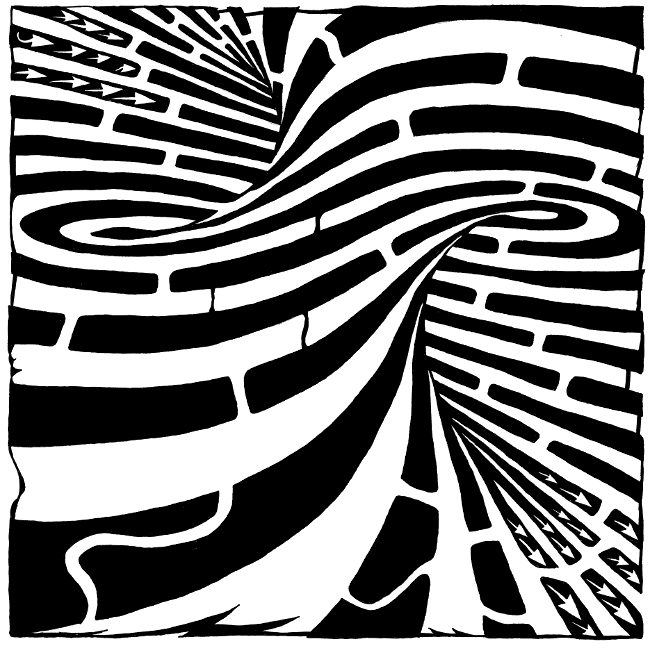
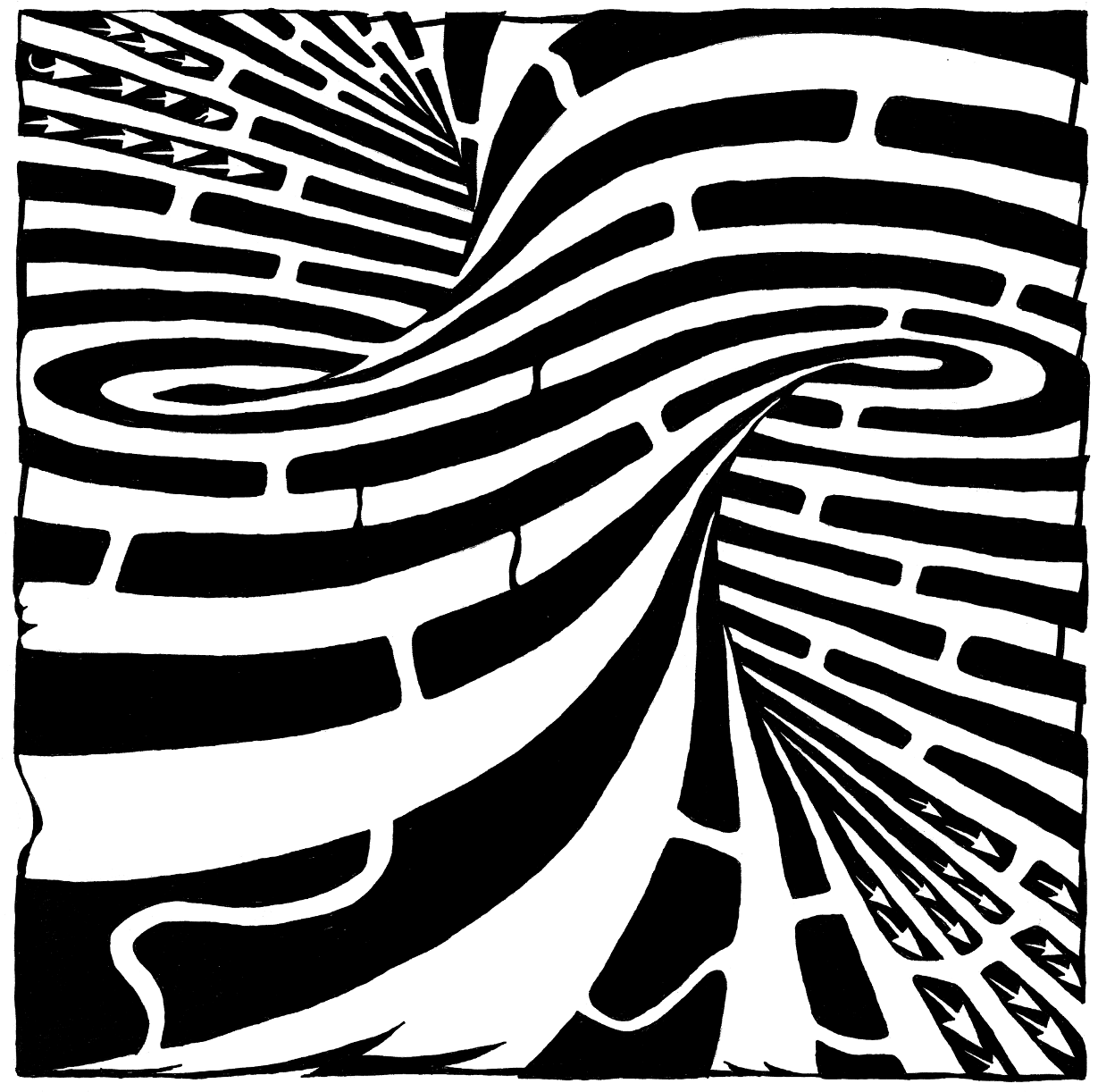
Maze of Tornado Forming by Yonatan Frimer

Maze of Tornado Forming

forming tornado maze, the twisted and warped maze by Yonatan Frimer
Maze of a twisted and warped time-space.
This maze should be fairly easy for you to solve but if you can't,
then you can find the solution to the twisted and warped maze

Top Eleven Places to download the Twisted and Wraped Maze

  1. Tornado Twisted and Warped Maze on Devian Art
  2. Tornado Twisted and Warped Maze on Fine Art America
  3. Tornado Twisted and Warped Maze on Flickr
  4. Optical Illusion Mazes on Facebook
  5. Tornado Twisted and Warped Maze on TwitPic
  6. Tornado Twisted and WarpedMaze On Rossello Damiano
  7. Tornado Twisted and WarpedMaze on Photobucket
  8. Tornado Twisted and WarpedMaze on Saatchi Online
  9. Tornado Twisted and WarpedMaze on Live Journal
  10. Tornado Twisted and WarpedMaze on Picassa
  11. Tornado Twisted and Warped Maze on Red Bubble
  12. Twisted Tornado Maze on Blogger
  13. Tornado Twisted maze again on Blogger (de facto maze)
This maze is to celebrate the Coriolis effect and how it bends and warps space and time to redefine the concept of a straight line. The outward lines converge to a spinning vortex in the middle in a harmonic and majestic fashion. The maze winds through the design with entrances marked by arrows, as seen in the upper left corner, and exits, also marked by arrows, with a location based in the bottom right corner of the image. This maze is fairly trippy to solve and has a difficulty rating of 6.

Friday, March 12, 2010

Brain replays control decision-making process

Replaying recent events in the hippocampus of the brain has more to do with active decision-making process than with creating long-term memories, according to a new study.

Conducted by researchers at Carnegie Mellon University and the University of Minnesota Medical School, the study of rats navigating a maze found that replays occurring in the hippocampus were not necessarily recent or frequent paths through the maze, as would be expected if the event was being added to memory.

On the other hand, the replays often were paths that the rats had rarely taken or, in some cases, had never taken, as if the rats were trying to build maps to help them make better navigation decisions.

Dr. Anoopum Gupta, and his colleagues said that their findings suggest replays in the hippocampus are not merely passive echoes of past events, but part of a complex, active process of decision-making.

"Our work provides clues into how animals construct a complete, fully navigable representation of their environment, even if they’ve only partially explored that environment. The cognitive maps created in this way may allow animals to plan novel routes or shortcuts. As we learn more about the neural mechanisms that enable animals to flexibly navigate through the world, we hope to apply those lessons to research in robotics that could improve autonomous navigation systems," said Gupta.

The team used electrode ‘hats’ to record brain activity of rats as they navigated a maze. In particular, they monitored certain neurons, called place cells, which fire in response to physical locations.

That enabled the researchers to identify where an event that was being replayed was located based on which place cells were firing.

During an experiment, a rat might be in one portion of the maze, while the firing of place cells in the hippocampus indicated that the rat was replaying information about a different location.

On a task with two behavioral sequences, A and B, the researchers found that the animals would replay sequence B more often though they spent most of their time running sequence A.

This meant that the rats were most likely to replay the path they had experienced less often, which indicated that replay is not just a function of helping an animal remember what it has experienced most frequently or most recently, but an important function in helping it map its whole environment.

During the replay process, the research team also was able to observe the animal making connections between paths that it had never physically traveled before.

This further suggested that replay plays a role in helping an animal learn and maintain the entire map of its environment and make connections within it.

The rats were not just reviewing recent experience to move it to long-term memory.

The study was published in the journal Neuron.

Want to test the theory, try solving some of these mazes, created by Yonatan Frimer
The maze entrances and exits are marked by arrows.


Maze of the statue of david, by Yonatan Frimer
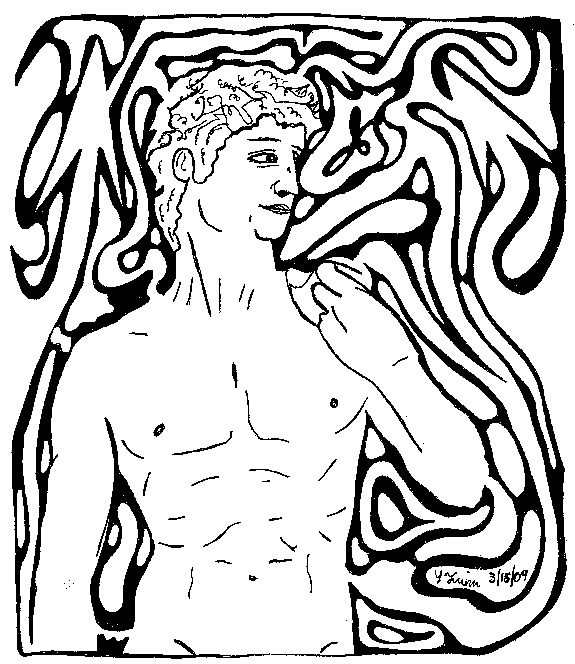
maze of david by michaelangelomaze of Michalangelo's david statue of marble in italy
Maze Portrait Of Michalangelo's David

Check out more mazes at these links
Maze cartoon - Team Of monkeys maze
maze art - inkblot mazes


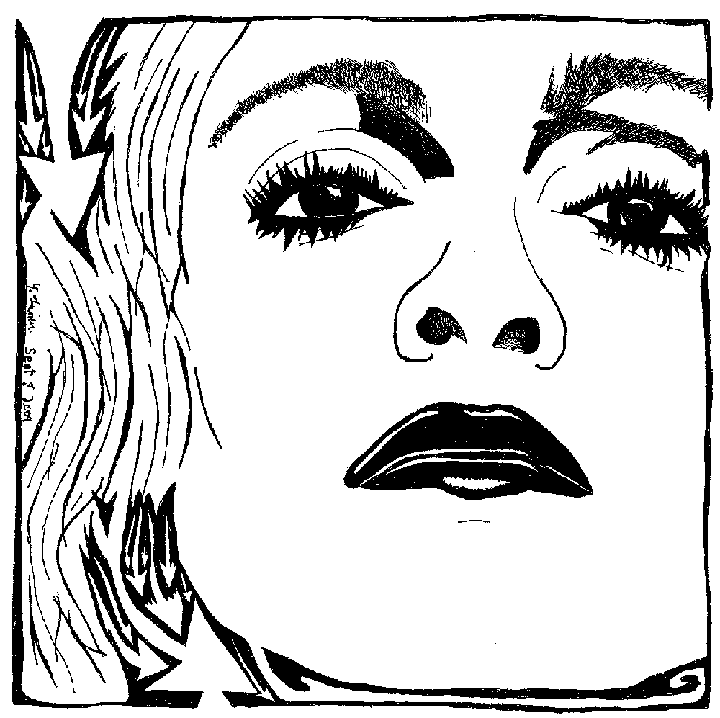
Maze portrait of Madonna, by Yonatan Frimer
Madonna Ciccone Portrait Maze

Check out more mazes at these links
Maze cartoon - Team Of monkeys maze
maze art - inkblot mazes


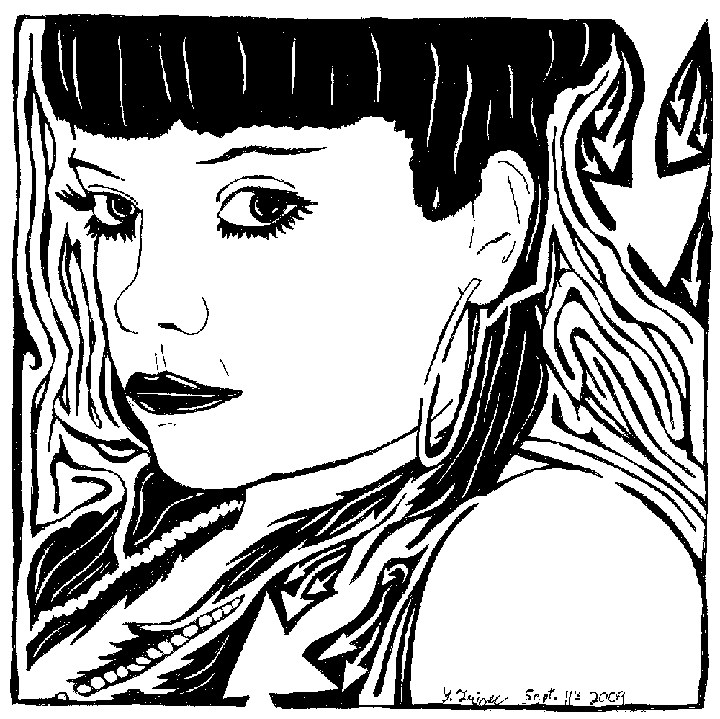
Maze portrait of Lilly Allen, by Yonatan Frimer
Maze of Lily Allen
Maze of Lily Allen


Check out more mazes at these links
Maze cartoon - Team Of monkeys maze
maze art - inkblot mazes


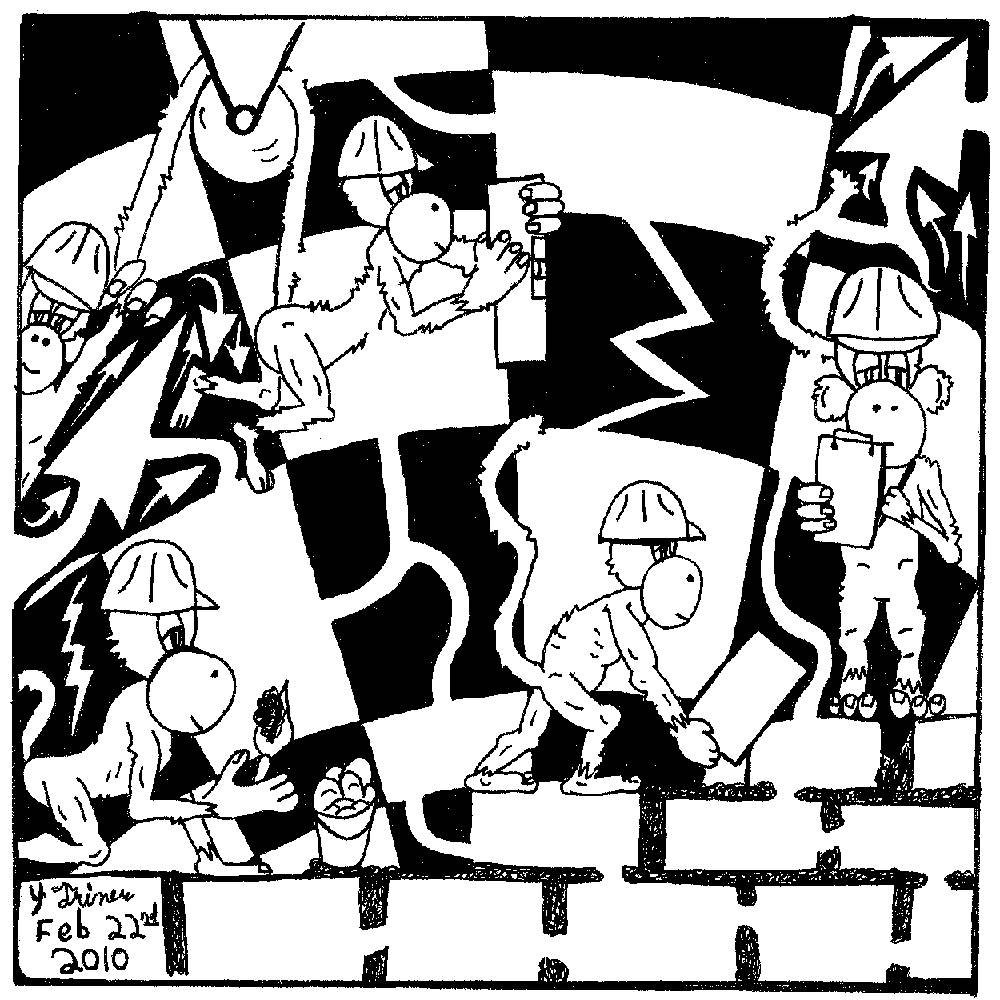
Freemason Monkeys -
Illuminati's building a wall
- Maze
freemason monkeys - illuminati apes
Click here to view the freemason monkeys maze larger

Check out more mazes at these links
Maze cartoon - Team Of monkeys maze
maze art - inkblot mazes


Monkeys For Justice - Team Of Monkeys Judicial Panel
Monkey judges, justic, courtroom, sternographers
Monkey Judges Maze:
"Trained to dispense justice in even the most difficult legal cases"
Click here to view the justice monkeys maze larger

Check out more mazes at these links
Maze cartoon - Team Of monkeys maze
maze art - inkblot mazes


Thursday, January 21, 2010

'Intelligent' oil droplet navigates chemical maze by Colin Barras


'Intelligent' oil droplet navigates chemical maze by Colin Barras

There's some humbling news from the chemical world for anyone who has ever found themselves lost in a garden maze. A simple droplet of organic solvent can find its way through a complicated labyrinth with nothing more to go on than a slight pH difference.

Bartosz Grzybowski's team at Northwestern University in Evanston, Illinois, used a common polymer to fashion a two-dimensional labyrinth some 2 centimetres on each side. They then flooded the maze with strongly alkaline potassium hydroxide solution, before placing a hydrochloric acid-soaked chunk of gel at the maze exit.

After about 40 seconds they placed a droplet of mineral oil containing hexyldecanoic acid at the maze entrance. The oil, which cannot mix with the potassium hydroxide solution, sits on the surface. But it remains still only for a matter of seconds – it soon begins tearing around the maze at speeds of up to 10 millimetres per second, sniffing out the shortest path to the acid-soaked gel, and solving the maze in the process.

"In the movie files you can see the droplet makes decisions," says Grzybowski. "It goes left along the wrong path, decides there's something fishy with that and so it reverses. It looks almost alive."

Primitive intelligence

But while Grzybowski says the droplet displays behaviour that might be called "primitive intelligence", there's a simple chemical mechanism at work.

The droplet leaches its acid into the surrounding solution, losing hydrogen ions in a process known as deprotonation – a process that affects the surface tension of the droplet itself.

"But to the front and rear of the droplet [the surrounding solution] has a different pH," he says, because of diffusion from the acid-soaked gel at the maze exit. Those tiny pH differences affect the amount of deprotonation that happens at the front and rear of the droplet, and this asymmetry sets up a surface tension gradient that forces the droplet into motion. "I would say the droplet is self-propellant," he says.

Grzybowski's team thinks that the behaviour could have implications for cancer treatments. They would like to develop micelles – aggregates of molecules such as balls of lipids – that can navigate pH gradients in the body. "A good reason for that is cancer is more acidic than the rest of the body," Grzybowski says.

Slime mystery

But the chemical behaviour could also offer an explanation for the apparently intelligent behaviour of the slime mould Physarum polycephalum, which 10 years ago was shown to possess similar maze-solving abilities by Toshiyuki Nakagaki, now at Hokkaido University in Sapporo, Japan.

"The [new] finding is interesting since it gives an insight of possible physical mechanisms for Physarum to find a path in the maze," Nakagaki says.

Journal reference: Journal of the American Chemical Society, DOI: 10.1021/ja9076793

Some cool mazes for you to enjoy after reading this article....


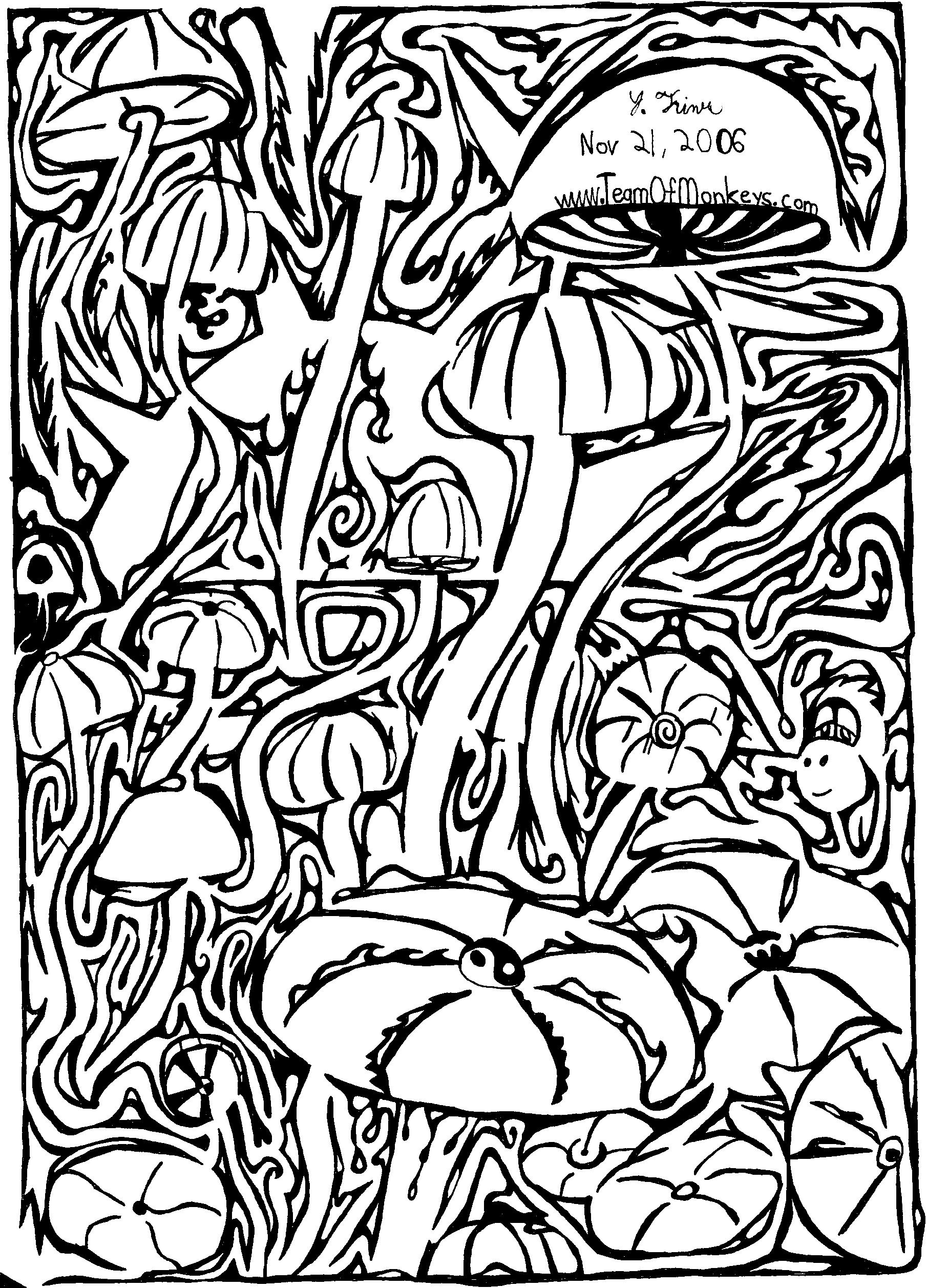
Hallucamazenic Maze-A-Delic - Ink On Paper, Winter 2006,

by Yonatan Frimer
Maze A Delical mazes

www.TeamOfMonkeys.com
Your source for mazes.


Maze Kong - Ink on Paper
Maze Kong

Maze of the Statue of Liberty - 2009
maze of the Statue Of Liberty - InkBlotMazes Ink Blot Mazes, By Yonatan Frimer, your humble maze artist Ink Blot Mazes, Optical Illustion, celebrity, icon inkblot
Maze of Liberty - 2009 - Yonatan Frimer

Which maze of the statue of liberty do you like better. The psychedelic one or the line art one? Answer with care down bellow in the comments. Thanks

Psychedelic Liberty Maze

statue of liberty maze pschedelic maze art
Maze of the Statue of Liberty